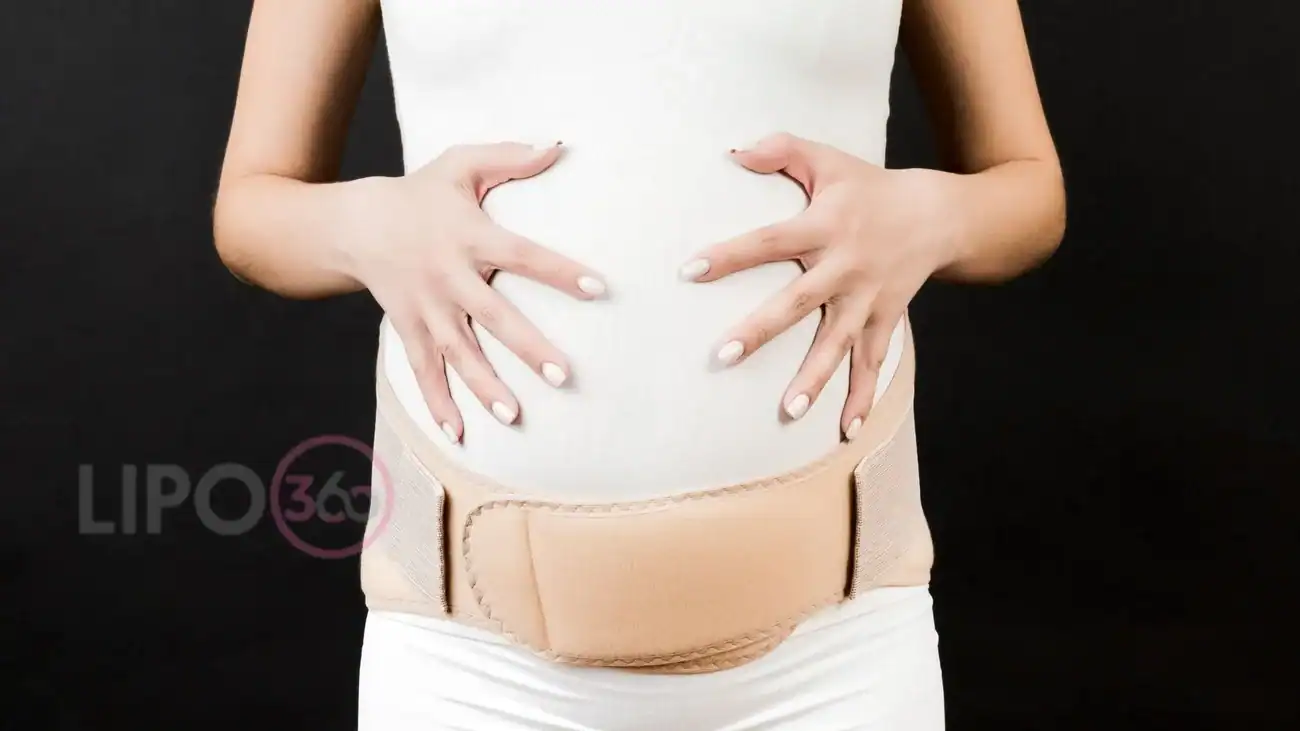
You’ve probably seen the ads. A heavily pregnant influencer steps into a soft band, beams at the camera and claims it will ensure that your abs do not split open. Reassuring, and not quite true.
Pregnancy belly bands can do their job effectively. It can alleviate backache, help with a heavy bump, and stabilise the pelvis as the ligaments relax. But the very different question of whether belly bands help reduce diastasis recti has a less-3-word answer that doesn’t fit on a product label.
Read The Diastasis Recti Treatment Birch Guide in Depth.
Most belly bands will not fibricate xrectob on a centre shiftpectrus that places both musculus muscles! According to Bedfordshire Hospitals NHS Foundation Trust, during pregnancy, the abdominal muscles stretch and the tissue in the middle of the tummy (the linea alba) becomes softer, which can lead to diastasis recti.
While some people use belts or belly bands for support, wearing them too tightly may not protect the linea alba and could potentially contribute to pelvic floor problems.
What a Belly Band Actually Does in Diastasis Recti Birch?

Belly bands come in two broad shapes:
- Maternity support bands — soft, stretchy, worn during pregnancy to ease back and pelvic strain.
- Postpartum binders or wraps — firmer, designed for after birth, often after a C-section.
Both compress the abdomen and lower back. According to a study published in 2002, abdominal compression through the use of belts can increase trunk stiffness and reduce compression forces on the lower back, which helps offload weight from the lumbar spine and may support the abdominal wall during activities such as walking and lifting.
However, this does not directly address the linea alba, the connective tissue running down the middle of the abdomen that stretches during pregnancy. Because that gap is real diastasis recti Birch, and no strap on the outside will change what happens on the inside. It can hold you in. It can’t hold you together.
💡 THINGS THAT ALMOST EVERY GUIDE WONT WRITE ABOUT
The belly bands Birch tackle the situation on the outside. The line on the inside, diastasis recti, occurs at your linea alba, the tissue that connects those two sides of you. According to NHS clinical guidance, physiotherapy aims to reduce the space between muscle layers in diastasis recti, though it may not fully resolve the condition. External compression, managed pressure, breath control, and gradual loading primarily help with support but do not directly reach or repair deeper tissue.
Where Belly Bands Help, and Where They Don’t ?
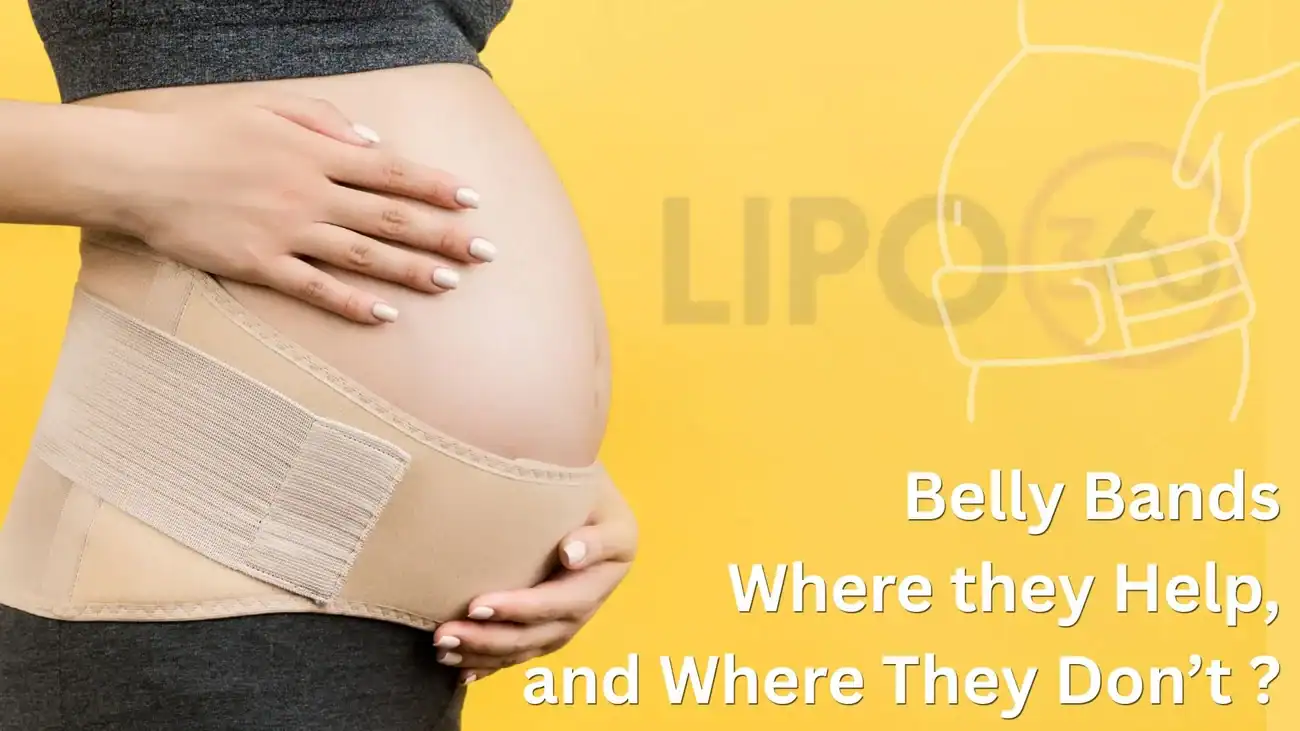
There’s a difference between using a band as a support tool and using it as a prevention tool. As support, the case is solid. As a prevention, the case is much weaker.
Women’s health physiotherapists generally agree that any postnatal benefit from a band depends on what’s done alongside it — usually structured core rehab. On its own, the band’s effect tends to be small, and any improvement usually reflects the rehab work rather than the fabric.
| Situation | Likely benefit of a belly band | Honest verdict |
|---|---|---|
| Late-pregnancy back pain | Real | Worth a try |
| Pelvic girdle pain (PGP) | Often substantial | Get a physio assessment first |
| Heavy bump, awkward walking | Real | Short-burst use is sensible |
| Preventing the muscle gap forming | Limited | Don’t rely on it |
| Closing an existing gap postnatally | Mild, mostly cosmetic | Not a substitute for rehab |
| Return to running or lifting | Adds support, can mask weakness | See a women’s health physio first |
The Mistake That Turns a Helpful Band Into a Hidden Problem ?
Here’s the bit you don’t see in the marketing.
When a band is worn snugly across the whole abdomen, all day, right through pregnancy and into postpartum, it changes how pressure moves through your core. Compression at the waist sends intra-abdominal pressure along the path of least resistance — and after pregnancy, that path is downward, onto the pelvic floor.
So you can end up with:
- New pelvic floor symptoms — heaviness, urgency, leaking or similar that may have been present before
- Weakened deep core muscles. Not a good deep core workout; the band works for you.
- A cautious diastasis: with the belly looking flat, but no change in gap underneath when the belt is off.
You don’t go throwing the baby out with the bathwater to fix it. It’s to use it how physios really advise: short doses, specific tasks (long walks, lifting heavy weights, carrying a baby on one side), and never as a substitute for rebuilding the core underneath.
Read Here More on How You Can Fasten the Pelvic Floor Muscle Repair Birch

🤝 HOW LIPO360 CAN HELP
If you’re past the early postnatal window and the gap hasn’t closed, or you’ve tried the band-and-Pilates route and the bulge is still there — Lipo360’s Birch Body Sculpt programme uses high-intensity electromagnetic stimulation to fire deep core muscles that are genuinely hard to activate on your own. It’s non-invasive and has no downtime. Call Lipo360 Birch on 03300 100 576 or book a free assessment to find out whether your diastasis is suited to non-surgical treatment. Treatment
What Genuinely Lowers Your Risk of Diastasis Recti
You can’t fully stop the linea alba stretching during pregnancy, that’s basic biomechanics. But you can influence how much it stretches, how well it recovers, and whether it tightens back up afterwards.
The things that actually move the needle:
- Strong, well-coordinated deep core muscles before and during pregnancy — particularly the transverse abdominis.
- Diaphragmatic breathing — spreads intra-abdominal pressure out instead of forcing it forward against the midline.
- Skipping crunches, sit-ups and twisting loads from mid-pregnancy onwards — standard guidance from most women’s health physios.
- Rolling onto your side to get out of bed (rather than crunching straight up).
- A graded postnatal return to exercise, ideally with a women’s health physio or a trained postnatal coach.
- Treating an existing gap properly rather than hiding it with shapewear.
That last point matters most for anyone reading this after the baby has arrived. Most cases of diastasis recti improve on their own within the first 8 to 12 weeks postnatally. Beyond that point, gaps that haven’t closed tend not to close on their own — and benefit from a more targeted approach.
Check Our Diastasis Recti and Body Toning Birch Program Results.
Next Steps Forward : Can Belly Bands Prevent Diastasis Recti Birch
If you take one thing from this, it’s that a belly band is a tool, not a solution. Use it for what it does well, supporting a sore back, steadying a heavy bump, easing a long day on your feet. Don’t ask it to do the job of your deep core, your pelvic floor, or a properly graded return to movement.
And if something feels off after birth, a soft ridge down your stomach, doming when you sit up, ongoing back pain, get it checked. The earlier a diastasis is assessed, the more options you have.
Book a Consultation With Us to Get a Full Assessment From Lipo360 Birch, UK
FAQs : Can Belly Bands Prevent Diastasis Recti during Pregnancy Birch ?
Can wearing a belly band during pregnancy stop diastasis recti from happening?
No belly band can stop diastasis recti Birch from forming. The condition is caused by the linea alba, the connective tissue running down your midline, stretching as your uterus grows. According to guidance from Milton Keynes University Hospital NHS, while a belly band does not change how much the tissue stretches, it can help support your back and pelvis when your bump feels heavy, which is useful in its own right.t.
Are postpartum belly binders Birch any better at preventing or fixing diastasis?
Postpartum binders give a real feeling of support and can ease soreness in the early weeks after birth, particularly after a C-section. Most physios will tell you they can give a slight nudge towards gap closure, but only when proper postnatal rehab is doing the heavy lifting. On their own, they don’t close a true diastasis. A binder bridges; it doesn’t heal.
How long should I wear a belly band each day during pregnancy?
The usual advice from women’s health physios is to wear one only when you actively need support, a long walk, a busy shift, lifting a toddler, rather than wearing it constantly. Current NHS physiotherapy guidelines do not specify recommended durations for wearing belly bands after pregnancy, nor do they address concerns about their potential effects on core muscles or the pelvic floor. Neither of those is what you want.
When should I stop relying on a band and see someone about a possible diastasis?
If you can feel a gap of two finger-widths or more down your midline, see doming when you sit up, or notice ongoing back pain, leaking, or a soft bulge above the belly button after eight weeks postnatally, book an assessment with a women’s health physiotherapist or a clinical specialist. A band might be making the bulge less obvious, it isn’t fixing what’s underneath.